
Describe a print or bring your artwork. Print sets the repeat, matches every colour to your ink and cloth, and writes the file your press runs — or one screen per colour — with a strike-off colour card.

What Print can take on
Print reads your design the way a print designer does. The repeat is set and checked across its seams, every colour is matched to the ink your press runs on your cloth, dark garments get their white layer, and screens are separated colour by colour — so the strike-off is the print you designed.
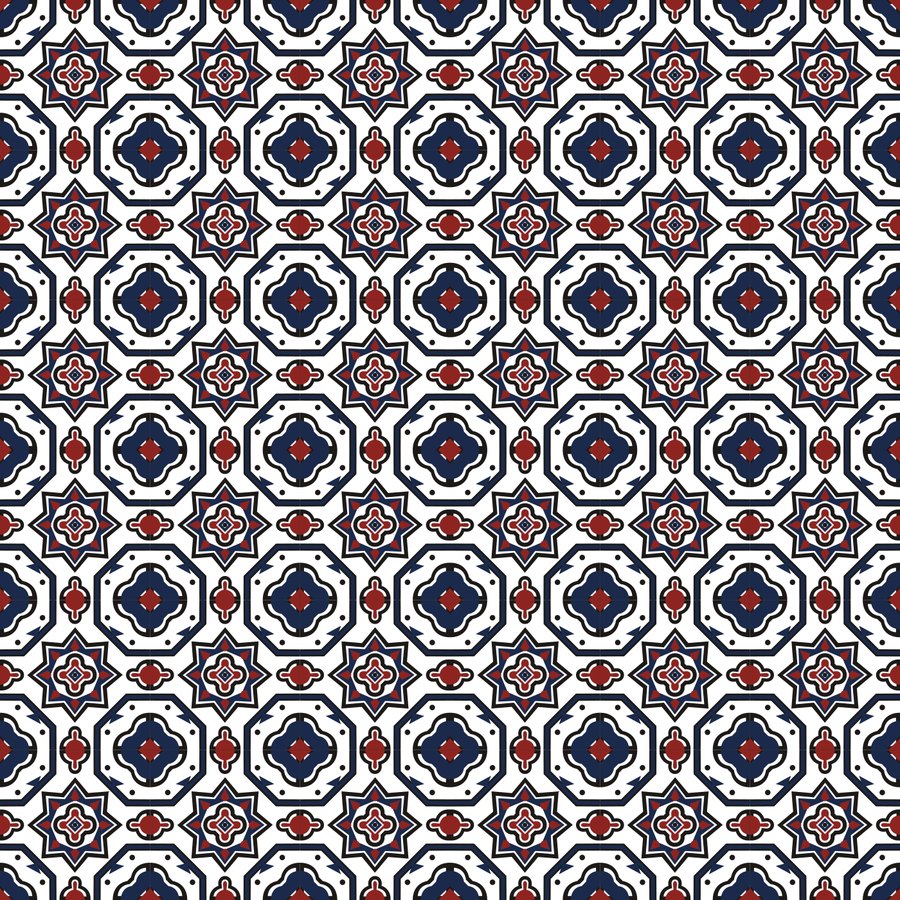
Ajrakh-style kurta yardage on cotton: a block-print repeat in indigo, red and ivory.
- The motif set as a repeat — straight, half-drop, brick or mirror — and checked across its seams
- Reactive ink chosen for the cotton
- Written at the press’s own resolution and width
- A colour card with each colour’s target values for the strike-off
Repeats that join
Straight, half-drop, brick and mirror repeats are checked across every seam, and engineered placements are printed once at full size — for yardage, scarves, sarees and garments.
Colour matched to your ink and cloth
Reactive for cotton and viscose, acid for silk, wool and nylon, disperse for polyester, pigment for blends. Every colour is checked against what the ink can reach before the file is written.
One screen per colour
For rotary, flatbed and hand-table screens, the design is separated into one screen per colour — solid colours as clean screens, gradients as halftones — with the lighter colour spread under the darker, so a small misregistration leaves no gap.
Written for your press
The file is written at your press’s resolution and width — up to 3.4 metres — with the white layer or mirror its process needs, and read back before you get it.
What’s in every print file
Every print file is one bundle: the file the press runs, and everything the printer needs to set the colour and approve the strike-off before the bulk.
TIFFPrint-ready file
The design separated for your press’s own inks, at its resolution and width — with a white layer for dark garments, mirrored for sublimation transfer.
Quality report
Processdirect to garment
Fabricbanana fibre, 180 gsm
Size600 × 600 mm
Resolution300 dpi, native
InksC M Y K + white
Placementprinted once
Quality report
Process, fabric, size, resolution, inks and placement, and how close every colour lands — checked before the file goes out.
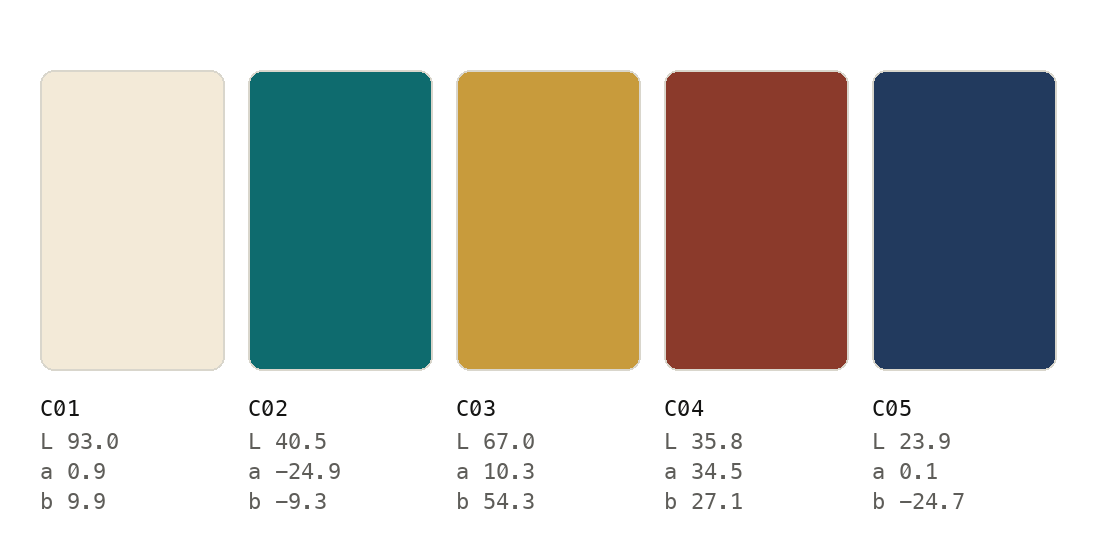
Colour card
1IvoryL 93.1
2TealL 40.6
3OchreL 67.0
4RustL 35.8
5NavyL 23.9
Colour card
Every colour of the design with its target L*a*b* values, to measure the strike-off against.
Strike-off
A short print of the design on your cloth, made from the production file, to approve before the bulk run.
Runs on your press
Choose your press when you start. The file is written for that press — its inks, its resolution, its width and its process.
Digital direct-to-fabric printers, up to 3.4 m wide
A print-ready TIFF separated for the printer’s own inks — reactive, acid, disperse or pigment.
Sublimation printers
A mirrored file for transfer paper, in disperse ink colours.
Direct-to-garment printers
A placement file, with its white layer for dark garments.
Rotary, flatbed and hand-table screens
One separation per colour for the engraver — solid screens and halftones, overlapped where colours meet; rotary repeats from 640 to 1,018 mm.
Open-ink printers
Your ink type and its maker are asked, and every cloth is judged by that ink’s own fibre list.
Start where your design starts
From a prompt
Describe the print in your own words — the motifs, the colours, the repeat and the cloth. It is drawn first, then set for your press.
From your artwork
Upload a sketch, a scan or a photo of a print. It is redrawn clean, in your house’s look, with its colours matched to your ink.
From a trend
Start from a rising trend. Its colours and motifs carry into a print made for your press.
Running a printing unit?
Get started with Print
Pro
For growing studios and independent brands. Per month, ₹2,500 to spend each month.
Max
For factories and high-volume teams. Per month, ₹11,000 to spend with a 10% volume bonus.
Prices in INR, excluding applicable tax; shown in your local currency at checkout. Prices and plans are subject to change at PatternAI’s discretion.
Frequently asked questions
What file does my press get?
Which ink suits my fabric?
Will my repeat join?
Can I get one screen per colour?
Will the colours match on the fabric?
How large can a print be?
How is a print file priced?
What if my press isn’t listed?
More on print and its files
From a prompt to the print file your press runs
Free to start. Pro and Max plans available.